
Crabbing & Shellfish Foraging Guide
Explore Humboldt County’s coastline with our crabbing and shellfish guide. Learn proven techniques for Dungeness crab, clams, and more, understand tides and conditions, and find the best spots along the North Coast.

Essential Gear
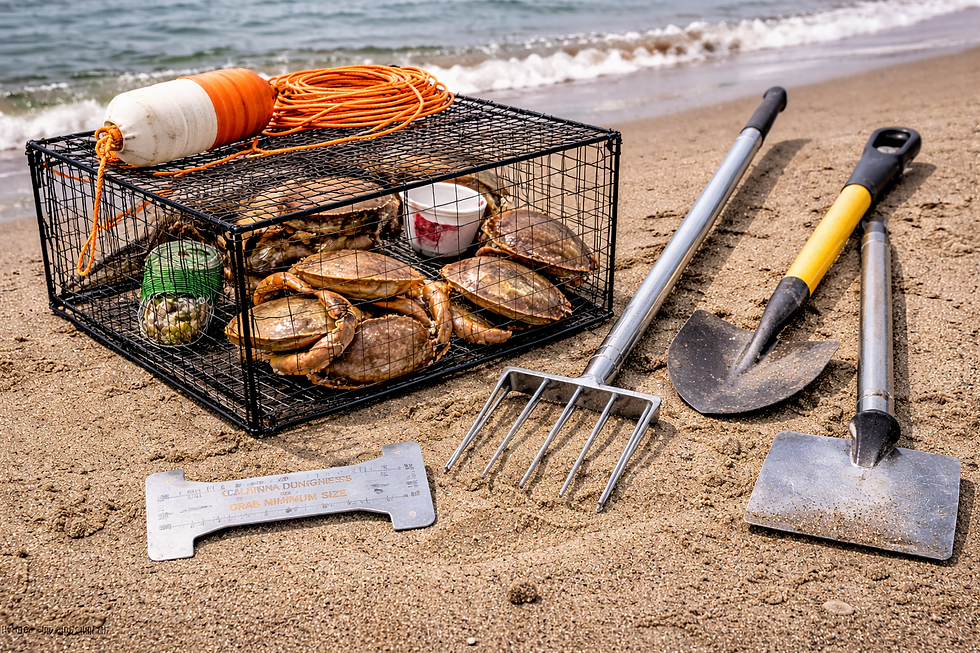
Successful crabbing and shellfish foraging starts with the right gear. These traps, tools, and setups are commonly used along Humboldt County’s coastline.
1. Traps & Snares
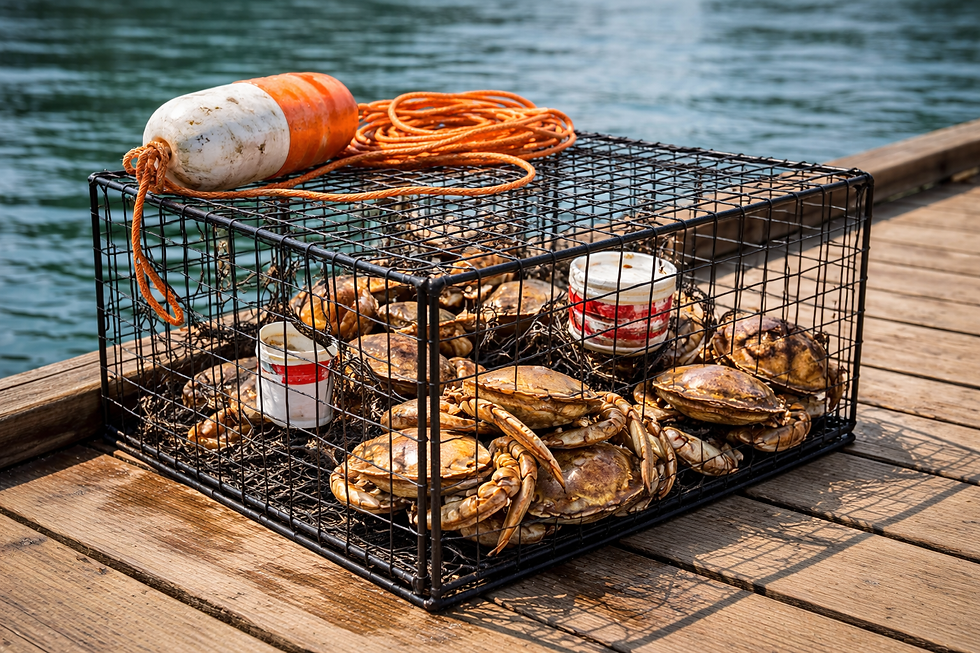
• Crab Traps: Standard box or ring traps for bays, docks, and boats
• Crab Snares: Surf fishing setup for beaches
• Rope & Buoy: 50–100 ft line with float for traps
3. Tools & Accessories
• Gloves: Protect hands from shells and claws
• Boots/Waders: Stay dry and stable in surf and mud
• Knife/Tool: For cleaning or cutting bait
2. Clam Gear
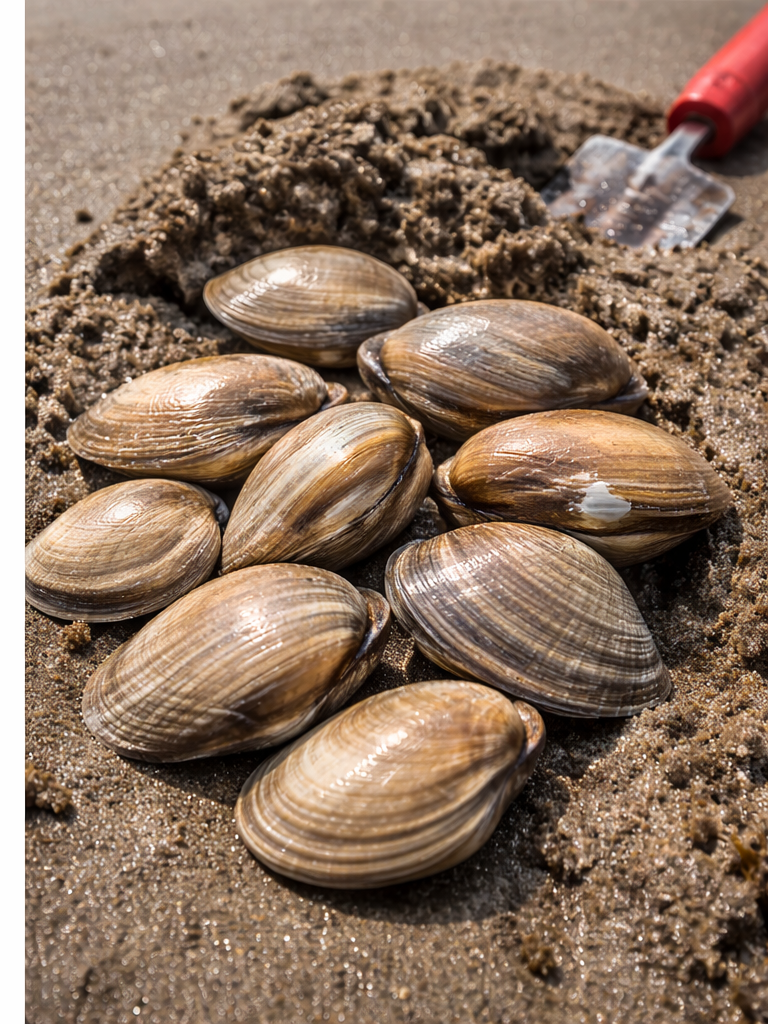
• Clam Shovel: Long, narrow blade for digging
• Clam Gun (PVC): Fast digging in sandy beaches
• Clam Rake: Works well in softer sand and mud
4. Measuring & Holding
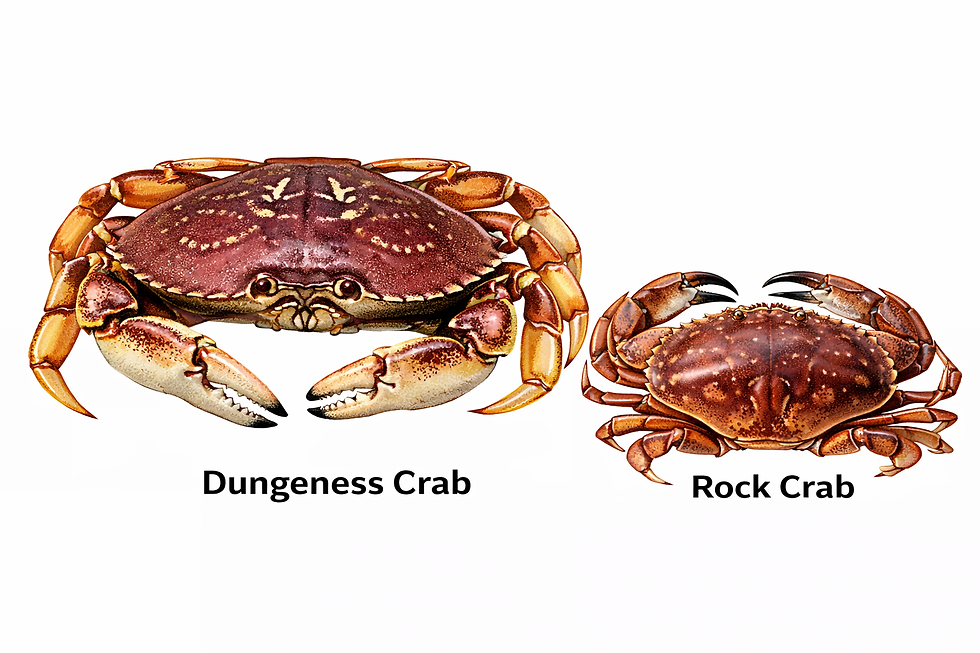
• Crab Gauge: Check legal size (Dungeness & rock crab)
• Shellfish Gauge: For clams (if applicable)
• Aerator Bucket: Keeps crabs alive and fresh
Crabbing & Shellfish Foraging Tactics

Crabbing and shellfish foraging in Humboldt County requires understanding tides, surf conditions, and seasonal changes. Use these practical tips to find and catch Dungeness crab and harvest clams along the North Coast.
Prime Seasons
Dungeness crabbing is typically best from late fall through winter when crabs move into bays and along the coast. Clam digging is most productive during minus tides when more beach is exposed and shellfish are easier to access. Calm ocean conditions and early morning low tides often provide the best opportunities.
Reading the Tides
Along the coast, focus on tide movement, structure, and water conditions. For crabbing, look for deeper channels, jetty edges, and bay entrances where current moves bait and crabs feed. For clams, target open sandy beaches and mudflats during low tide, especially areas with visible shows, small holes, or disturbed sand. Pay attention to surf conditions, as calmer water makes spotting and digging easier.
Crabbing Techniques (Bays, Jetties, & Coastline)
Reading the Water
Crabs usually hold near:
• deeper channels and drop-offs
• areas with steady current flow
• structure like jetties, rocks, and pilings
• muddy or sandy bottoms where food collects
In bays and along the coast, crabs often move:
• with incoming and outgoing tides
• toward areas where bait and scent are carried by current
• along edges of channels and flats
Tips for Success
• Set traps or snares in moving water for better scent spread
• Check gear regularly to keep bait fresh
• Fish during tide changes when crabs are most active
• Place gear near structure or channel edges for better results
Crabs rely heavily on scent, so positioning your gear in current helps attract them more effectively.
Always remember to check the current bag & size limit.
Local Tip (Humboldt Coast)
Crabbing is often best on moving tides, especially around bay entrances and jetties where current pushes bait and attracts feeding crabs.
Clam Techniques (Beaches & Bays)
Reading the Sand
Razor Clams: Gaper Clams:
• open sandy beaches • bay mudflats
• small dimples or “shows” • larger holes or siphon shows
• wet sand near waves • deeper, softer sand
Littleneck Clams: Tips for Success
• bays with gravel/mud • fish low tide
• eelgrass and shallow flats • look for shows or holes
• little to no surface signs • use the right tool
• cover ground
Always remember to check the current bag & size limit.
Local Tip (Humboldt Coast)
Best on minus tides, razors on beaches, gapers and littlenecks in Humboldt Bay, and always check current health advisories before harvesting
Mussel Foraging (Rocky Coastline)
Reading the Coast
Mussels usually hold in:
• rocky shoreline and tide pools
• wave-washed areas
• lower intertidal zones
Tips for Success
• harvest during low tide
• look for tightly clustered groups
• avoid damaged or open shells
• use a tool to remove cleanly
Mussels attach to rocks, so focus on exposed structure when tides drop.
Always remember to check the current bag & size limit.
Local Tip (Humboldt Coast)
Always check current health advisories before harvesting, as mussel closures are common along the North Coast.


Crabbing Baits
Choosing the right bait is key for successful crabbing. These bait options are commonly used along Humboldt County’s coastline to attract Dungeness and rock crab.

Best Crab Baits
• chicken (legs, thighs)
• fish carcasses (salmon, rockfish, etc.)
• squid
• mackerel
Local Crabbing & Foraging Hotspots
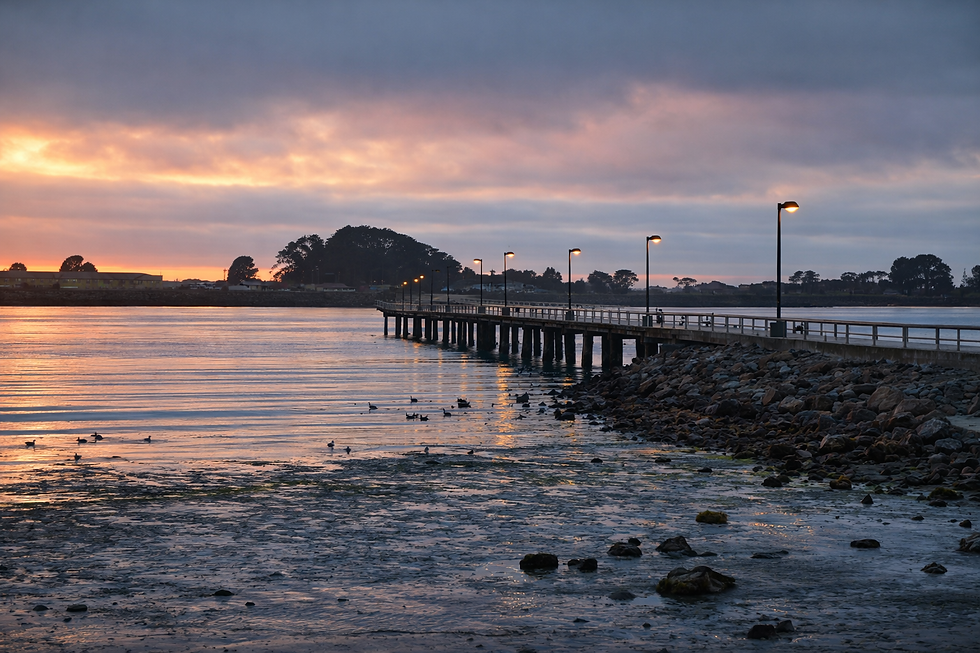
Humboldt Bay
Access: Public docks, boat launches, shoreline areas, and Del Norte Pier (Eureka, Fields Landing, King Salmon).
Species: Dungeness crab, rock crab, & clams.

North & South Jetty (Samoa & Eureka)
Access: Walk-in access from Samoa (North Jetty), and South Jetty near Eureka.
Species: Dungeness crab, rock crab, mussels.

Moonstone Beach
Access: Beach and rocky shoreline access near Trinidad.
Species: Mussels, clams, occasional rock crab.