
Freshwater Fishing Guide
Explore Humboldt County’s rivers and lagoons with our freshwater fishing guide. Learn proven techniques for trout, bass, and steelhead, understand local water conditions, and find the gear setups anglers use across the North Coast.


Freshwater Gear Essentials

1. Rods
• Trout: 6–7 ft light or ultralight spinning rod
• Bass: 6’6”–7’ medium spinning or baitcaster
• Steelhead: 8’6”–10’ medium or medium-light rod
2. Reels
• Trout: 1000–2500 size spinning reel
• Bass: 2500–3000 size (spinning/baitcaster)
• Steelhead: 3000–4000 size (smooth drag)
3. Main & Leader Line
• Trout: 4–6 lb monofilament or fluorocarbon
• Bass: 8–12 lb fluorocarbon or 20 lb braid
• Steelhead: 20–30 lb braid + fluoro leader
4. Tackle
• Trout: Size 6–10 hooks, small split shot, trout floats, beads
• Bass: Size 1–3/0 hooks, bullet weights, jig heads, soft-plastic rigs
• Steelhead: Size 2–4 hooks, pencil lead or slinkies, swivels, beads
Successful freshwater fishing starts with the right gear. These rod, reel, line, and tackle setups are commonly used by anglers targeting trout, bass, and steelhead in Humboldt County.
Fishing Tactics

Freshwater fishing in Humboldt County requires understanding how rivers change with weather, flow, and season. Use these practical tips to fish more effectively for trout, bass, and steelhead in local rivers and lagoons.
Prime Seasons
Steelhead fishing typically peaks from December through March when winter rains bring fish into the rivers. Trout fishing is often best in spring and early summer when water levels stabilize and insect activity increases. Bass fishing improves in late spring through early fall, especially in warmer waters like Big Lagoon.
Reading Water
In rivers, look for “seams” where fast and slow water meet, along with deeper pools and current breaks behind rocks or logs. Trout and steelhead often hold in these areas to conserve energy while waiting for food drifting downstream. In lagoons and lakes, focus on structure like weed beds, drop-offs, submerged logs, and shoreline cover where bass and trout often feed and ambush prey.
Trout Techniques (Rivers, Lagoons, & Lakes)
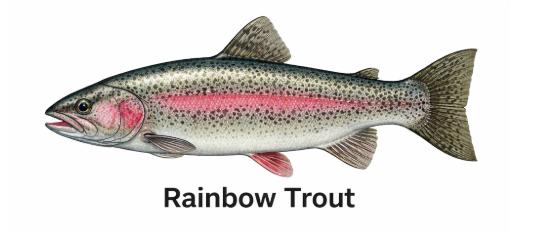
Reading the Water
Trout usually hold in:
• slower pools below riffles
• current seams where fast and slow water meet
• undercut banks and shaded areas
• deeper pockets behind rocks or logs
In lagoons and lakes, trout often stay near:
• cooler deeper water
• drop-offs near shore
• areas with insect activity
Tips for Success
• Cast upstream and allow bait or lures to drift naturally
• Use lighter line for clearer water conditions
• Fish early morning or evening when trout are most active
• Move quietly along the bank to avoid spooking fish
Trout feed on insects drifting in the current, so natural presentations work best.
Always remember to check the current bag & size limit.
Local Tip (Humboldt Rivers)
After rainfall, trout often move into slower pools and edges of current where food is pushed downstream.
Bass Techniques (Freshwater & Big Lagoon)

Reading the Water
Bass usually hold near:
• weed beds and lily pads
• submerged logs or fallen trees
• rocky shoreline structure
• drop-offs and deeper edges
In lagoons, bass often patrol shallow areas near vegetation where baitfish and insects are common.
Tips for Success
• Cast along shoreline cover and structure
• Use slow retrieves near weeds and drop-offs
• Early morning and sunset are usually the most productive
• Topwater lures can work well during calm conditions
Bass are ambush predators, so focus on areas where they can hide and strike passing bait.
Always remember to check the current bag & size limit.
Local Tip (Big Lagoon & Stone Lagoon)
Try soft plastic worms or swimbaits along weed lines and lily pads with slow retrieves. Use darker color baits in cloudy waters.
Steelhead Fishing (Humboldt Rivers)

Reading the Water
Steelhead usually hold in:
• tailouts at the end of pools
• seams where fast and slow water meet
• deeper runs near river bends
• behind large rocks or submerged logs
These areas allow fish to conserve energy while they are waiting for food to drift downstream in rivers.
Tips for Success
• Fish early morning or late afternoon when activity increases
• After rainfall, wait for rivers to start clearing before fishing
• Keep your drift slow and natural through holding water
• Cover water and move spots if you’re not getting bites
Steelhead often bite subtly, so watch for small line twitches or slight pauses when your bait is drifting downstream.
Always remember to check the current bag & size limit.
Local Tip (Eel & Mad River)
When rivers are slightly green and dropping after rain, steelhead fishing is often at its best. Focus on deeper runs and tailouts where migrating fish tend to hold.
Bait & Lures
Humboldt's river, lake, & lagoon conditions require a systematic approach to tackle selection. Our suggestions are curated specifically for our local variety of trout, bass, & steelhead populations.
Trout Rigs & Baits
Common Trout Rigs
Drift Fishing Rig
(Most Common in Rivers)
Best for rivers like the Mad, Trinity, and Eel.
Setup:
• Main line
• Split shot weights
• Barrel swivel
• 18–24" leader
• Size 8–12 hook
• Worm / roe / bead
This lets bait drift naturally through currents.
Best Trout Baits
Popular trout bait:
• nightcrawlers
• salmon eggs
• powerbait
• beads
Bass Rigs & Baits
Common Bass Rigs
Texas Rig
(largemouth bass)
Best for Big Lagoon.
Setup:
• Bullet weight
• Offset worm hook
• Soft plastic worm
Weedless setup for structures.
Best Bass Baits
Popular bass bait:
• plastic worms
• swimbaits
• spinnerbaits
• topwater frogs
Steelhead Rigs & Baits
Steelhead Rigs
Drift Fishing Rig
(most popular locally)
Best for Eel and Mad.
Setup:
• Sliding weight/swivel
• 18–36 leader
Natural bottom drift through tailouts.
Best Baits
Popular steelhead bait:
• roe bags
• pink yarn balls
• beads
• sand shrimp
Spinner Setup
Great when covering water.
Best spinners:
• Panther Martin
• Rooster Tail
• Mepps Aglia
Use 1/16 – 1/8 oz depending on current speed.
Float / Bobber Setup
Very effective in lagoons and slow water.
Use:
• Slip float
• 4–6 lb leader
• Size 8–12 hook
• Small split shot
Keeps bait slightly off bottom.
Spinnerbait Setup
Great for finding active fish.
Best spinnerbaits:
• white / chartreuse
• double willow blades
• 1/4 – 3/8 oz sizes
Steady retrieve along weed edges.
Jig / Swimbait Setup
Effective near structure.
Use:
• jig head head
• swimbait or craw plastic
Fish slowly along bottom near rocks.
Bead Setup
Very effective in clear water.
Use:
• 8–10 mm beads
• 10–12 lb leader
• size 2–4 hook
Beads imitate salmon eggs drifting downstream.
Spinner Setup
Great when covering water.
Best spinners:
• Blue Fox Vibrax
• Rooster Tail
Use 1/8 – 1/4 oz sizes for river flow.


Local Freshwater Hotspots

Trinity River
Access: Highway 299 pullouts and public gravel bars near Junction City and Douglas City.
Species: Chinook salmon, steelhead, and resident rainbow trout.

Mad River
Access: Blue Lake, Hatchery Road, and Arcata Bottoms access points.
Species: Winter steelhead, coastal cutthroat trout, and resident trout.

Eel River
Access: Highway 101 pullouts, Scotia Bluffs, and gravel bars near Fortuna, Ferndale, and Leggett.
Species: Fall Chinook salmon, winter steelhead, coastal cutthroat trout, and resident trout.

Freshwater Lagoon
Access: Highway 101 roadside parking and short walk-in spots along the lagoon.
Species: Rainbow trout, cutthroat trout, and largemouth bass.

Big Lagoon
Access: County Park boat ramp and shoreline access areas.
Species: Cutthroat trout, steelhead, and largemouth bass.

Ruth Lake
Access: Campgrounds, public boat ramps, and shoreline access points.
Species: Rainbow trout, largemouth bass, smallmouth bass, kokanee salmon, and catfish.